
A drain may smell because the water in its trap evaporates, letting the air in the drainage system into the room. Adding a bit of water to the trap may help, but only try it after ruling out a potential gas leak. Returning odors mean there's something more to this problem.
The water in the bend does the work
A traditional S-trap maintains a water seal in a curved section of pipe. The water is the barrier, and a stopper or drain cover has nothing to do with it. The trap is typically visible under a sink, or under a shower or floor drain.
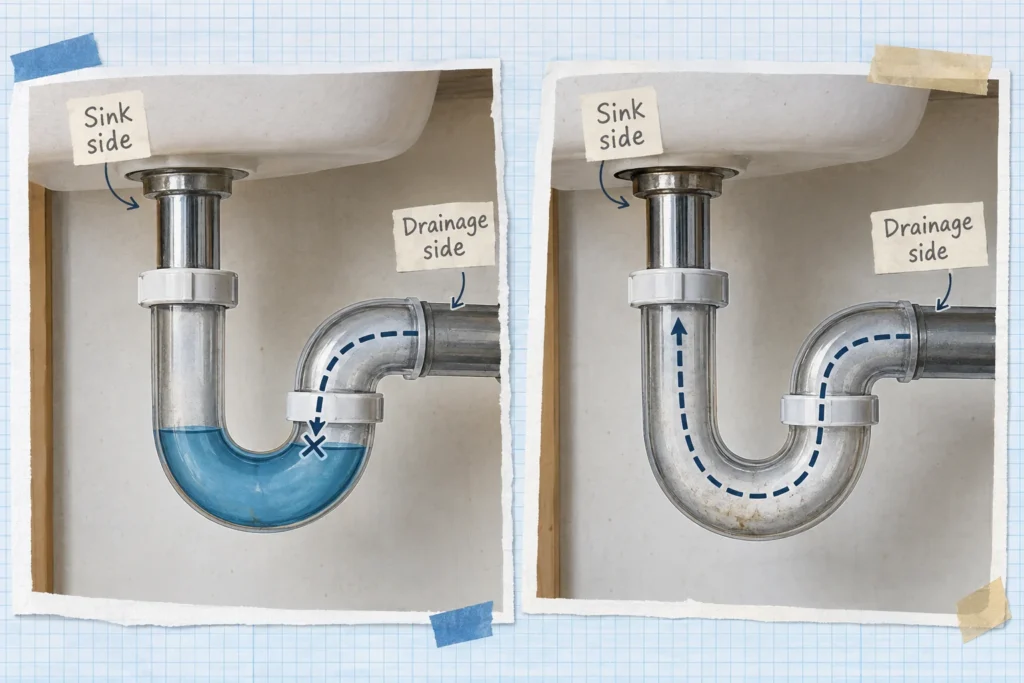
One possibility with long periods of disuse is evaporation. For a minor localized odor with no emergency for gas concern, running water through a sink or shower may help. For a plumbing floor drain, adding water slowly, stopping when it starts to pool or back up, may help. Water may be added to an opening, but be sure it is a drain. There is no set amount of water to add or time to wait for it to dry.
Picture me, in an imagined guest bathroom, moving spare towels off the sink to reach a faucet nobody uses. The odor has interrupted my preparation, and I'm tempted to purchase a scented product to cover the odor. Instead, I'd replenish the trap and log the date. I want to know the cause and not introduce a cover up.
Pay attention to when it comes back
Improvement after adding water may be considered a trap-related issue. It may not have been the only cause, for example, leakage may have been another contributing cause. The vent helps protect the water in the trap and allows for pressure changes. Negative pressure can cause water to be pulled out and positive pressure can push air through a seal which may look intact.
I would request an investigation of the plumbing system if the odor persists, returns, or follows use of another fixture that is being used regularly. Useful information, or clues, may be a gurgling sound or slow drain. If a back up occurs, it is suggested to stop using all fixtures and request service. Adding water may help, but in the end it may introduce more of a problem.
Several smelly fixtures deserve context. If an entire guest bathroom sat unused, several traps could have lost water independently. Several regularly used fixtures developing related symptoms makes a shared drainage or venting concern more plausible. Odor also travels, so smelling it near three drains doesn’t confirm three entry points.
The drain might not be the source
Drain buildup, disposal residue, and the water itself can produce unpleasant odors. If a mild smell appears when you turn on the faucet, and urgent gas concerns are absent, collect water in a clean glass and move away from the sink before checking its odor. Don’t taste it. Odor that follows the glass points toward the water; odor remaining at the sink points toward the drain area, but doesn’t distinguish buildup from sewer-air entry.
If only the hot water smells bad, you may want to contact a professional to check the water heater. If the cold water smells, you may want to contact your water authority. Some residue may be scraped away without having to take apart the plumbing. I wouldn’t cover an unpleasant odor with a cleaner that is volatile.
Give the plumber the timing, not a diagnosis
Record which fixture was unused, when you added water, whether the odor changed, and what was draining when it returned. Ask the plumber to investigate trap-seal loss and possible concealed entry paths, not simply replace a vent because the room smells. After repair, watch during ordinary use and the previously troublesome timing. The useful result is an explained, corrected pathway, not just an odor absent during the appointment.
Sources and references
- Wisconsin Department of Health Services: Air: Sewer Gas (2023-04-18)
- Pacific Gas and Electric Company: Gas Safety
- International Code Council: Code Corner: 2024 International Plumbing Code Chapter 9: Vents (2025-04-08)
- International Code Council: An Overview of Plumbing Trap Requirements Under the International Plumbing Code (2026-05-26)
- Portland Water Bureau: Taste and odor issues in drinking water
- PLOS ONE; Heriot-Watt University researchers: Pathogen cross-transmission via building sanitary plumbing systems in a full scale pilot test-rig (2017-02-10)