
Foundation cracks get expensive when homeowners treat them as a cosmetic issue first and a water or movement issue later. The useful check is not obsessing over every hairline mark. It is learning which cracks appear stable, which are being fed by poor drainage, and which may signal wall movement. Horizontal cracks, bowing, water entry, and cracks paired with sticking doors or unlevel floors deserve faster escalation than a dry, unchanged hairline crack. (huduser.gov)
TL;DR
- Measure before you guess. Length, width, location, and whether the two sides of the crack are flush matter more than a vague note that a crack exists. HUD’s inspection standard explicitly uses crack length and width. (hud.gov)
- Start with water control. UMN says the soil around the house should slope away from the foundation and that downspout extensions should discharge at least 4 feet beyond the wall. EPA Indoor airPLUS uses 5 feet from the foundation as a stronger target. (extension.umn.edu)
- A stable hairline vertical crack is usually in a different category from a horizontal crack, a bowed wall, or a crack that keeps widening. (huduser.gov)
- Check twice: once after heavy rain and once after a dry stretch. Soil moisture swings can change what you see. (ndsu.edu)
- If the crack scores high on the WIDE check below, diagnosis before cosmetic repair is usually the cheaper sequence.
This article is for homeowner screening and maintenance planning, not engineering advice. Get an in-person evaluation if you see wall bowing, offset surfaces, active water intrusion, or a crack roughly 1/4 inch wide and 12 inches long or more. (hud.gov)
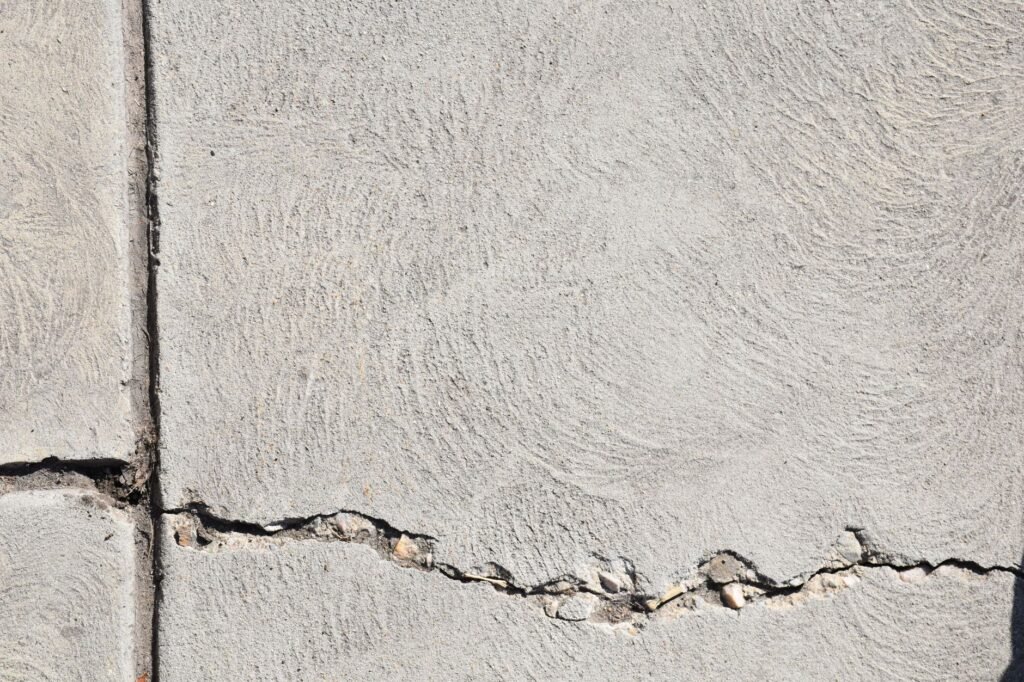
Use the WIDE check to sort watch-it cracks from act-now cracks
WIDE (Width & Incline & Displacement and other symptoms) is the first-phase triage tool that I am using to determine if a client should be [1] watching, [2] correcting water runoff from the home to [3] get a professional to provide a proposed solution. This tool will filter out to determine if someone is required to get a structural recommendation.
| Factor | Low concern | Medium concern | High concern or red flag |
|---|---|---|---|
| W – Width | Hairline and hard to measure. | About 1/16 inch to 1/8 inch. | More than 1/8 inch, water passing through, or roughly 1/4 inch wide and 12 inches long or more. HUD uses that larger size as a defect benchmark in its foundation inspection standard. (hud.gov) |
| I – Incline or pattern | Short vertical crack, dry, no obvious movement, often in the middle portion of the wall. | Diagonal or stair-step crack, especially near corners, windows, or doors. | Horizontal crack, or a pattern that suggests lateral pressure or wall bending. (huduser.gov) |
| D – Displacement | Both sides of the crack are flush. | One end widens more than the other, or the crack has a noticeable taper. | One side is shifted, or the wall bows, bulges, or leans. (huduser.gov) |
| E – Elsewhere symptoms | No dampness and no house symptoms. | One supporting clue, such as a damp spot, white mineral residue, a sticking door, or a recent grading issue. | Water entry, repeated sticking doors or windows, unlevel floors, or multiple symptoms at once. (hud.gov) |
Add the points mentally. A total of 0 to 2 means document and watch. A 3 or 4 means fix runoff and moisture control within the month, then monitor. A 5 or more means the crack has enough risk markers that paying for diagnosis is often the lower-cost move. Skip the score and escalate immediately for any red-flag width, horizontal cracking, bowing, or fast change. (huduser.gov)
How to do the check without overcomplicating it
- Walk the whole perimeter with a flashlight, tape measure, phone camera, and notepad. If you have a basement or crawl space, start at the lowest level and work outward. (huduser.gov)
- Measure the crack’s length and widest width, then photograph it with the ruler in frame. Do not rely on memory. HUD’s inspection standard tells inspectors to measure both. (hud.gov)
- Check whether the wall is still in plane. A wall that bows, or one side of a crack that sits proud of the other, is a different problem from a flat hairline crack. (huduser.gov)
- Look at drainage before you look at filler products. A practical maintenance target is about 1 inch of slope per foot for the first 6 feet away from the house, while a common code benchmark is at least 6 inches of fall in the first 10 feet. (extension.umn.edu)
- Trace every downspout and sump discharge. UMN says downspout extensions should discharge at least 4 feet beyond the wall. EPA Indoor airPLUS uses 5 feet from the foundation as a stronger target, and HUD warns against sump discharge draining back toward the basement. (extension.umn.edu)
- Check for supporting symptoms: dampness, white mineral residue, sticking doors or windows, unlevel-feeling floors, or new interior gaps. HUD lists door and window function and floor level clues as part of the crack picture. (hud.gov)
- Repeat the check after a soaking rain and again after a dry spell. In drought, soil can shrink away from the house and pull parts of the structure slightly out of square; after rewetting, some symptoms can ease. (ndsu.edu)
What common crack patterns usually mean
Pattern matters because not all cracks spend money the same way. A stable shrinkage crack often calls for documentation and water management. A horizontal crack or bowed wall moves you out of the watch-it category much faster. (huduser.gov)
| What you see | What it usually points to | Best next move | When to escalate |
|---|---|---|---|
| Short vertical hairline crack, dry, no offset | Often minor shrinkage or normal aging, especially if it looks old and unchanged. (huduser.gov) | Photograph, measure, and recheck seasonally. | If it widens, leaks, or picks up side effects. |
| Diagonal or stair-step crack near a corner, window, or door | Possible settlement or moisture-driven movement. These patterns deserve context from drainage and nearby symptoms. (huduser.gov) | Fix runoff, document weekly, and compare nearby doors and windows. | If the crack grows, tapers sharply, or appears with new sticking openings. |
| Horizontal crack in a block or masonry wall | Potential lateral soil pressure or wall bending, not just cosmetics. (huduser.gov) | Treat it as a professional-review issue, even if you also correct drainage. | Now, especially if there is bowing. |
| Crack plus damp wall, white residue, or water after rain | A water-path problem that can keep worsening until runoff is controlled. (extension.umn.edu) | Extend downspouts, restore grade, and check window wells and sump discharge. | If water persists after the first round of drainage fixes. |
| New crack plus sticking door or window and an unlevel floor feeling | Movement is showing up in more than one place. HUD treats those combined signs as inspection clues, not random annoyances. (hud.gov) | Plan for diagnosis, not just patching. | Soon. |
A realistic household example
An individual residing in a residence sees a diagonally oriented fissure measuring approximately 22 inches across at one end of the garage’s foundation. The crack measures approximately 1/8 inch at its widest point and appeared dry during the initial evaluation. No offsets are readily visible. One downspout located outside the garage approximately 18 inches away from the garage wall has been installed. The soil adjacent to the corner of the garage where the crack began has been compressed into a shallow channel due to erosion. After prolonged periods of heavy rain, the mudroom door located inside the house has experienced friction and is sticking.
The conditions under which the WIDE check received a score of 3 are: Width of 1, Incline of 1, Displacement of 0 and Elsewhere of 1. While this score may not indicate a complete disaster, it should not be dismissed lightly either. The most cost-effective method to rectify this situation would be to first correct the water runoff issues by lengthening the downspout, modifying the slope of the land, taking a photo of the crack with a ruler, and checking the crack weekly for up to one month. If, during this time, the crack opens wider, the water leaks out or the door continues to go out of square, have someone diagnose the problem before spending any money on repairs to the crack with patching and painting. There would be a much more costly mistake made by repairing the crack in response to the water issues.
Where homeowners lose time and money
- Sealing first and diagnosing later. If surface water or sump discharge is feeding the problem, filler may only hide the symptom. (extension.umn.edu)
- Judging by width alone. A thin horizontal crack with bowing can matter more than a slightly wider but stable vertical shrinkage crack. (huduser.gov)
- Inspecting only once. Moisture-driven movement can look different after rain than it does at the end of a dry spell. (ndsu.edu)
- Taking photos with no scale and no date. You cannot tell whether a crack is active if every picture is just a close-up. HUD and GSA both emphasize measuring and recording. (hud.gov)
- Ignoring the site, not just the wall. Poor grading, short downspouts, clogged leaders, and bad window-well drainage can keep re-creating the same problem. (extension.umn.edu)
- Assuming the tree itself is always the direct villain. Sometimes the real issue is moisture loss in nearby soil, not roots physically punching through concrete. (huduser.gov)
When the simple plan is not enough
Drainage fixes are the first move, not a universal cure. HUD and GSA both note that horizontal cracking, bowing, poor backfilling, saturated soils, frost heave, settlement, and soil shrink-swell can all drive foundation distress. In some regions, long dry periods can shrink fine soils enough to change door operation and open cracks; in others, excess water is the bigger trigger. If the crack remains active after water-control fixes, assume you have a diagnosis problem, not a filler problem. (huduser.gov)
- Choose diagnosis first when you see bowing, leaning, offset surfaces, or a horizontal crack. That is the point to bring in a structural engineer or similarly qualified foundation professional. (huduser.gov)
- If large trees or shrubs are concentrated on one side and symptoms worsen in drought, ask whether soil moisture change is part of the pattern. HUD specifically notes soil moisture loss to nearby trees or large plants as one cause of settlement. (huduser.gov)
- If your basement corner stays wet even after grading and downspout fixes, inspect the sump system and discharge path. FEMA recommends assessing the sump annually and testing it with water. (fema.gov)
- If expansive soils are common where you live, local building officials and a structural engineer may be worth consulting sooner. DOE’s foundation handbook notes that special construction techniques may be necessary in expansive-soil areas. (foundationhandbook.ornl.gov)
How to verify your diagnosis before you spend big
Homeowners get into trouble when they confuse a snapshot with a pattern. Before you sign a large repair contract, try to prove movement, not just fear it.
- Create a crack log with date, location, length, width, and photos. HUD’s standard inspection workflow starts with measurement. (hud.gov)
- Mark the crack and watch it. GSA describes a low-tech monitoring method using tape marks and weekly measurements; a commercial crack monitor works too. (gsa.gov)
- Keep a rainfall and drought note beside the log. If symptoms flare after storms or dry spells, that is useful pattern data for the professional you hire. (ndsu.edu)
- Re-check the same door, window, or floor area each time. Movement that shows up in multiple places carries more weight than an isolated cosmetic split. (hud.gov)
- After completing the initial drainage repairs, please check again following a heavy rain or within 30 days after completing the initial repairs. If upon reviewing the crack, you find it to be dry, stable and no longer expanding; then, you will have some additional documentation to support that the first issue to resolve was excess surface water from runoff.
Financially, foundation triage works best in this order: inspect, control water, monitor, then decide whether diagnosis or repair belongs in the budget now. Cosmetic patching comes at the end, not the beginning.
Bottom line
The best foundation crack check is not dramatic. Measure the crack. Score it with WIDE. Fix the water path. Then see whether the house settles down or keeps talking. Hairline, stable, dry cracks can often be watched. Horizontal cracks, bowing, displacement, leaks, and cracks paired with door or floor changes deserve faster diagnosis. From a money standpoint, the cheapest sequence is usually inspect, control water, monitor, and only then do cosmetic repair. (huduser.gov)
Is a hairline vertical foundation crack always harmless?
No. Many short vertical hairline cracks are minor or old shrinkage cracks, but “harmless” is the wrong default if the crack grows, leaks, or shows up with bowing, offset, sticky doors, or floor changes. Pattern and activity matter more than the word hairline. (huduser.gov)
When should I call a structural engineer instead of just sealing the crack?
Call sooner for horizontal cracking, bowed walls, shifted surfaces, repeated water entry, or a crack around 1/4 inch wide and 12 inches long or more. Those are not good wait-and-paint signals. (huduser.gov)
Can poor drainage really create foundation crack problems?
Yes. UMN, HUD, EPA, and code guidance all tie grading and water management to foundation performance. Soil that slopes toward the house, short downspouts, blocked drainage, and sump discharge that returns water to the perimeter can all keep stressing the same area. (extension.umn.edu)
Should I water around the foundation during a drought?
In some fine or clay-heavy soils, long dry periods can shrink soil enough to affect cracks, doors, and windows. NDSU suggests maintaining relatively consistent moisture and waiting to repair related wall and ceiling cracks until moisture returns to normal. Do it evenly and cautiously; in areas with expansive soils or ongoing structural symptoms, get local professional advice instead of guessing. (ndsu.edu)
If I fix the downspouts and the crack stops moving, am I done?
Maybe, but verify. Keep your photo log, remeasure after the next rain cycle, and make sure no new symptoms appear. A quiet crack after water-control fixes is reassuring; an active crack after those fixes is your signal to escalate. (gsa.gov)
Does a sticking door automatically mean foundation trouble?
No. Doors can move for several reasons, but HUD uses nonfunctioning doors and windows as indicators worth checking when cracks are also present. Treat it as a clue, not proof. (hud.gov)
References
- UMN Extension: Moisture in basements: causes and solutions – https://extension.umn.edu/moisture-and-mold-indoors/moisture-basements-causes-and-solutions
- International Residential Code 2015, Section R401.3 Drainage – https://codes.iccsafe.org/s/IRC2015/chapter-4-foundations/IRC2015-Pt03-Ch04-SecR401.3
- U.S. General Services Administration: Monitoring and Evaluating Cracks in Masonry – https://www.gsa.gov/real-estate/historic-preservation/historic-preservation-policy-tools/preservation-tools-resources/technical-procedures/monitoring-and-evaluating-cracks-in-masonry
- HUD USER: Residential Rehabilitation Inspection Guide – https://www.huduser.gov/portal/publications/rehabinspect.pdf
- HUD NSPIRE Standard: Foundation – https://www.hud.gov/sites/dfiles/PIH/documents/NSPIRE-Standards-v2.1-Foundation.pdf
- NDSU Agriculture: Dry Soil May Cause Building Problems – https://www.ndsu.edu/agriculture/ag-hub/ag-topics/ag-buildings/dry-soil-may-cause-building-problems
- EPA Indoor airPLUS New Construction Specification – https://www.epa.gov/sites/default/files/2020-12/documents/indoor_airplus_nc_specifications_version_2_public_comment_december_2020_508_compliant_1.pdf
- FEMA: Maintain your Sump Pump – https://www.fema.gov/node/356171