
When the discharge from a fixture other than the toilet creates bubbling, that means the discharge is altering air pressure in the connected drainage piping. The toilet is the fixture that shows signs of disturbance, not necessarily the fixture where the problem occurs. A drainage restriction or venting problem may be present, but bubbling, by itself, doesn’t tell you which. In the absence of other information, I wouldn’t agree to a toilet repair.
What the bowl is telling you
Drain piping carries air as well as wastewater, and vents help protect the water seals that keep sewer gases out of your home. ICC’s plumbing-code explanation makes a useful distinction: positive pressure can push bubbles upward through a toilet’s water seal, while negative pressure can pull water out of a trap. That’s why I’d describe exactly what you saw rather than call everything “gurgling.” Visible bubbles and a falling bowl level are different clues; a sound alone tells us neither the pressure direction nor where the fault is.
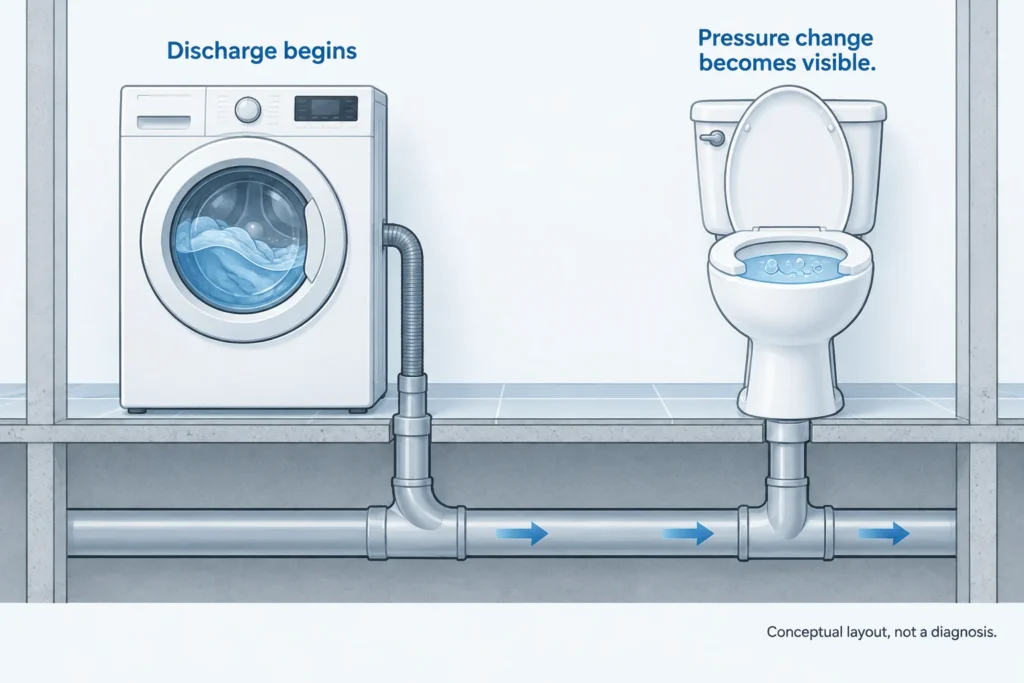
The timing matters, too. A washer pumping out sends water into the drains differently from a single toilet flush. Salem’s sewer guidance describes washer discharge exceeding a partially clogged connecting line’s available capacity, one possible explanation, not a diagnosis of your house. So if the toilet flushes normally but bubbles when the washer drains, I wouldn’t dismiss the complaint. The successful flush hasn’t answered the question you actually have.
Notice the pattern, without provoking it
I imagine that I am moving a wet laundry basket past the bathroom, when the washer pumps out, the toilet burps, and the laundry comes with a plumbing question. My first reaction is to flush and see what happens. This time I write down the time and see if the water level in the shower has already risen. The plumbing question comes with the service call and a recalcitrant shower.
I’m not too worried about a single isolated noise, especially if the water level isn’t rising. If a toilet is the only one acting up and it’s slowly draining, that is more concerning. It’s better to check the drainage-and-vents, and make sure they aren’t clogged. A blockage in the vent won’t show a drop in trap-water levels. Also, if two fixtures are close together, that doesn’t mean their drainage connects the same way.
When you call for service, we need to know what previously occurred. Did a specific fixture drain? Which toilet(s) reacted? Were other drains slow or backed up? Did water levels in the bowls rise or fall? Were there any odors? A video of the incident may help. Don’t run more water to get one when backup signs are present; bubbling can’t tell you how many flushes you have left before a backup.
Who should get the call?
Continual symptoms within your property leads me to believe it’s time to bring in a drain and vent diagnosis plumber to help locate the blockage rather than assume it’s a toilet that needs to be repaired. You should notify the sewer utility if you notice the similar symptoms on neighboring properties or if sewage is seen in the street. This could mean there is a blockage in the public system. If signs of a blockage are on your property, this doesn’t mean you will need to pay to have the public portion of your sewer line repaired. Each locality may differ from what Portland has, so check to see what your local utility maintains. The property line doesn’t necessarily tell you who is responsible, the same goes for the road or pavement.
If you have a septic system, contact a septic system service company. Gurgling, blockages and/or backups may be signs of a failed septic system, but noises alone cannot confirm a failed tank or drain field.
Don’t let a quick fix replace the explanation
I know it’s tempting to go for the plunger. It’s right there. But, it won’t fix the problem if there’s a restriction further along the shared piping. It also won’t fix an issue with venting. And chemical cleaners won’t fix the problem either. In fact, they could make things worse. Corrosive cleaners could splash up and burn you. If you’ve used a cleaner, tell the plumber. Climbing onto the roof to address vent problems is also unwise.
Before agreeing to a repair, I would want to know, “What is it about that fixture that explains why that toilet makes this one react?” If the problem has been addressed, and the provider says things should go back to normal, check for yourself. Don’t just assume things are back to normal because the toilet flushed once. Watch for bubble-free, normal drainage. Look for no odd changes in the levels of the water in the bowls, and no backups. The same symptom returning means the reason needs more explanation.
Sources and references
- International Code Council: Code Corner: 2024 International Plumbing Code Chapter 9: Vents (2025-04-08)
- Seattle Public Utilities: Side Sewer Backups
- City of Salem, Virginia: Sewer Backups & Overflows
- City of Portland Environmental Services: Report a Sewer Problem
- National Capital Poison Center: What’s in drain cleaner and what happens if you drink it?
- U.S. Environmental Protection Agency: Resolving Septic System Malfunctions